Electric vehicle adoption is accelerating across Australia. Businesses, fleet operators and property developers are under growing pressure to install charging infrastructure that is reliable, scalable and future-ready. The challenge? Many commercial sites simply don’t have enough grid capacity to support high-power EV charging without expensive upgrades.
That’s where battery buffered EV chargers come in.
Rather than relying solely on the grid to supply large bursts of power during charging sessions, battery buffered systems store energy locally and release it when needed. The result is faster charging, reduced strain on the grid and significantly lower infrastructure upgrade costs. So for organisations planning next-generation EV infrastructure, understanding how battery buffered charging works is becoming essential.
Battery Buffered EV Chargers Explained
A battery buffered EV charger integrates onsite battery storage directly with the charging infrastructure. Rather than drawing all power from the grid in real time, the system operates in 3 stages:
- Energy intake: The charger draws electricity from the grid at a steady, controlled rate that stays within the site’s existing capacity limits.
- Storage: This energy accumulates in an integrated battery module, creating a local power reserve.
- Delivery: When a vehicle connects, the charger draws from both the grid and stored battery energy simultaneously, delivering higher power output than the grid connection alone could support.
This allows the charger to deliver higher power output than the site’s grid connection would normally allow. In simple terms, the battery acts as a power reservoir. It “buffers” energy supply so vehicles can charge quickly without overwhelming the site’s electrical infrastructure. Battery buffered EV charging systems are particularly useful in locations where grid upgrades are costly, slow or impractical.
How Battery Buffered Systems Operate
The operational cycle involves continuous energy management across 4 key processes:
1. Controlled Grid Draw
The system pulls electricity from the grid gradually throughout the day, avoiding sudden demand spikes that trigger peak tariffs or exceed site capacity limits. This steady draw occurs during both active charging periods and idle time, maintaining the battery reserve.
2. Energy Accumulation
Incoming electricity charges the integrated battery system, which typically ranges from 50kWh to several hundred kWh depending on site requirements. Where solar generation is present, excess renewable energy can also feed into the battery, reducing reliance on grid power and lowering operational costs.
3. High-Power Charging Delivery
When a vehicle connects, the system assesses required charging speed and available resources. It then combines grid power with stored battery energy to deliver the requested charge rate. This combined output can support DC fast charging speeds of 50kW, 100kW, or higher, even on sites where grid capacity would normally limit charging to 22kW or less.
4. Automatic Replenishment
After each charging session, the battery gradually recharges from the grid, preparing for the next vehicle. The system manages this cycle automatically, prioritising immediate charging needs while maintaining adequate reserves for subsequent sessions.
This approach enables sites to deliver high performance charging without the need for major transformer upgrades, new substations or lengthy grid connection processes.
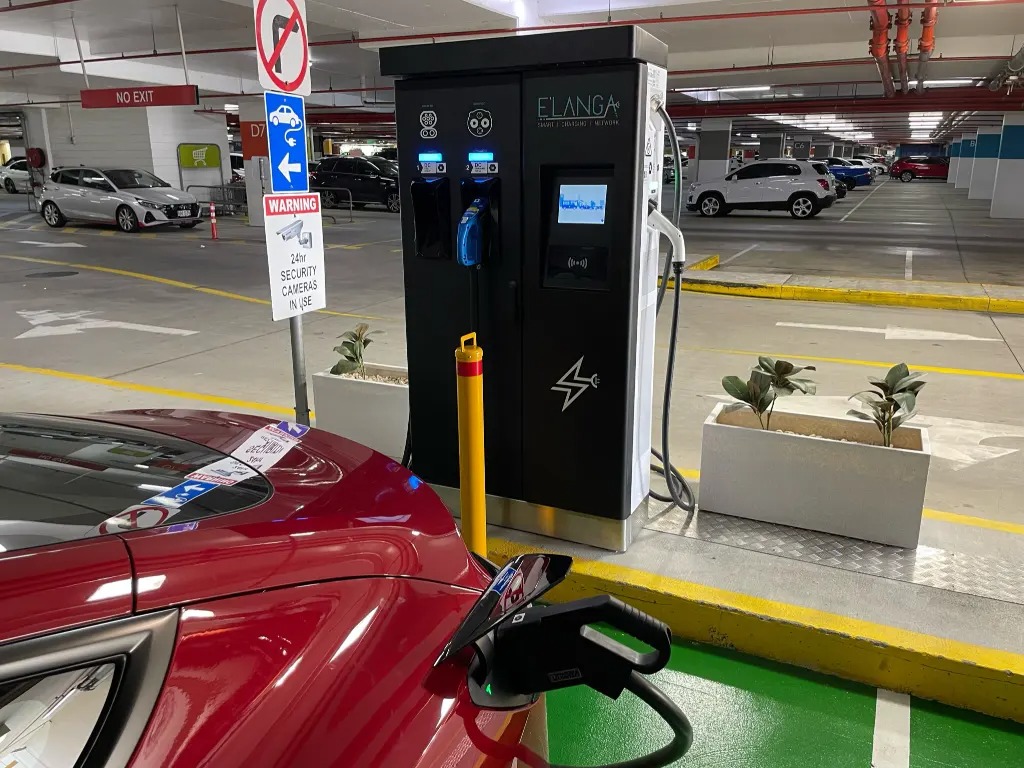
Why Battery Buffered Charging Matters for Commercial Sites
Traditional grid connected charging infrastructure faces increasing limitations as EV adoption accelerates. Battery buffered systems address several critical operational and financial challenges.
1. Eliminating Costly Grid Upgrades
Upgrading transformers, running new cables, or establishing enhanced grid connections can cost tens to hundreds of thousands of dollars. These projects often require months of planning, approvals, and installation work. Battery buffering reduces or eliminates these requirements by working within existing electrical capacity, cutting both costs and deployment timelines significantly.
2. Managing Demand Charges
Commercial electricity tariffs frequently include demand charges based on peak usage within a billing period. A single high-power charging session can establish a new peak that affects costs for weeks or months. Battery buffered systems smooth power draw across time, preventing these costly demand spikes while maintaining fast charging capabilities.
3. Enabling Fleet Electrification
Fleet operations often require multiple vehicles to charge simultaneously within tight timeframes. Without battery buffering, this creates severe grid strain and may be entirely unfeasible on constrained sites. Buffered systems enable concurrent charging by distributing energy delivery across both grid and battery sources.
4. Supporting Renewable Integration
Solar systems generate excess energy during daylight hours that often goes unused. Battery buffered chargers can capture this surplus and deploy it for vehicle charging, reducing grid consumption and improving the environmental and financial returns from renewable installations.
5. Future-Proofing Energy Infrastructure
As distributed energy resources become standard and vehicle-to-grid capabilities emerge, battery-integrated charging systems provide a platform for bidirectional energy flow, grid services participation, and advanced energy management strategies.
Battery Buffered vs Traditional Grid-Connected Charging
The fundamental difference lies in power delivery and infrastructure requirements. Traditional grid-connected systems draw all charging power directly from the site’s electrical supply in real time. This creates three primary constraints: charging speed is limited by available grid capacity, high-power charging typically requires expensive infrastructure upgrades, and simultaneous charging sessions compound demand on the electrical system.
To summarise:
- Dependent entirely on grid capacity
- Often limited in output by site infrastructure
- May trigger high demand charges
- Can require significant electrical upgrades
Battery buffered systems supplement grid power with stored energy, allowing charging speeds that exceed grid capacity limits. They require minimal or no infrastructure upgrades for high-power charging deployment, and they distribute energy demand over time rather than concentrating it during charging sessions.
For commercial environments where scalability and cost control matter, battery buffering provides substantially greater operational flexibility and lower total infrastructure costs. For commercial environments where scalability matters, battery buffering offers greater long-term flexibility.
To summarise:
- Supplement grid power with stored energy
- Deliver higher charging speeds on constrained sites
- Smooth energy demand
- Reduce infrastructure upgrade requirements
- More adaptable for future energy integration

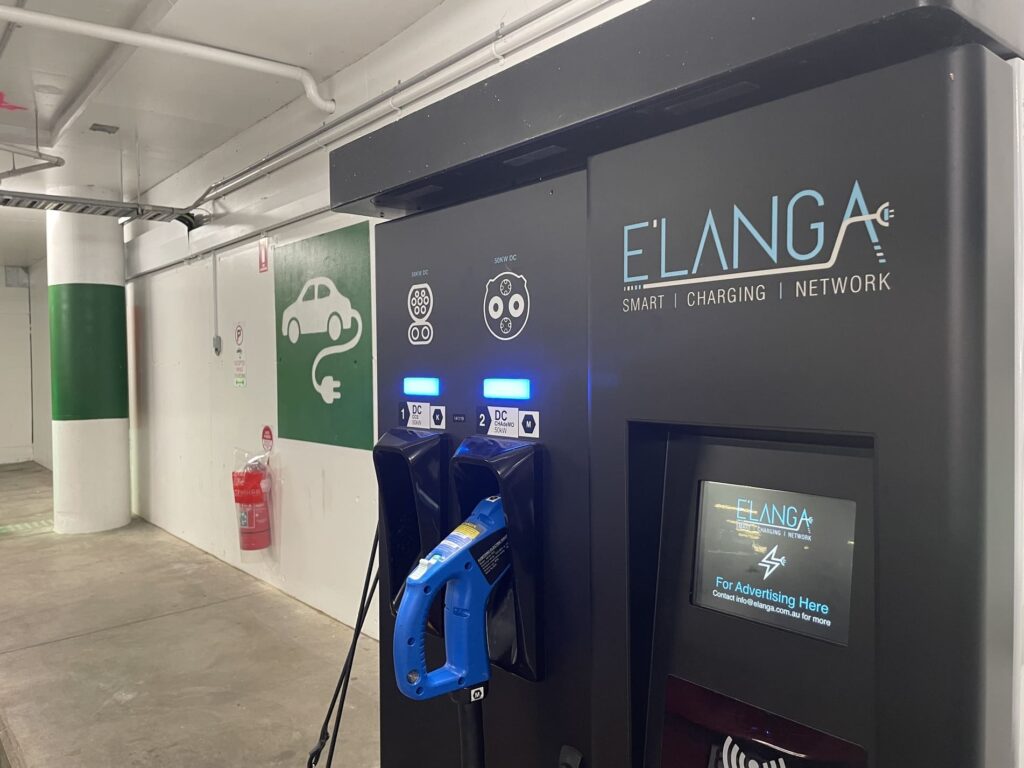
Optimal Applications for Battery Buffered EV Charging
While battery buffering offers advantages across various settings, several environments benefit most significantly:
Fleet Depots and Logistics Centres
Commercial fleets face concentrated charging demands as vehicles return to depot simultaneously. Delivery services, utility fleets, and transport operations require reliable high-power charging during off-road periods. Battery buffered systems enable this without exceeding site electrical capacity or triggering prohibitive demand charges.
Retail and Office Developments
Shopping centres, business parks, and commercial buildings often have limited spare electrical capacity after accounting for existing building loads. Adding EV charging infrastructure can strain systems not designed for this additional demand. Battery buffering allows charging deployment without major electrical system redesign.
Regional and Highway Fast Charging
Remote or regional locations frequently lack robust grid connections. Establishing traditional fast charging in these areas can require extensive grid reinforcement. Battery buffered systems make high-power charging viable on weaker grid connections, accelerating charging network expansion into underserved areas.
Industrial Sites with High Background Loads
Manufacturing facilities, warehouses, and processing plants already operate near capacity limits. Adding EV charging for staff vehicles or on-site fleets can push systems beyond their design parameters. Battery buffering prevents EV infrastructure from compounding existing peak loads.
Staged and Temporary Installations
Construction sites, event venues, and staged property developments require flexible infrastructure solutions. Battery buffered chargers provide scalable capacity without permanent upgrades, adapting as site requirements evolve.
Battery Buffering as Strategic Infrastructure
Australia’s transition toward electrified transport and decentralised energy systems requires infrastructure that adapts to changing demands and technologies. Battery buffered EV chargers deliver this flexibility through reduced grid dependency, faster deployment timelines, lower operational energy costs, renewable energy integration capability, and long-term scalability as EV adoption increases.
For organisations planning commercial EV infrastructure, battery buffering represents more than a workaround for grid limitations. It provides a strategic advantage by reducing upfront costs, shortening implementation timelines, and creating a platform for advanced energy management as EV technology and grid capabilities continue to evolve.
As EV charger installers, we design and implement charging systems tailored to site constraints and operational requirements. Whether you’re planning fleet infrastructure, workplace charging, or commercial installations, understanding how battery buffering works helps you make informed decisions about infrastructure that will serve your needs both today and as EV adoption accelerates across Australia.